Showing posts with label review. Show all posts

Monday, 14 November 2016

New Book from John Snow

Terje Hillesund aka John Snow is writing a
new book about Sigve the Awful, the
fifth book in The Viking Series

I am glad to tell that I'm writing a new book in the Saga of Sigve the Awful. It's the fifth book in the series, but I haven't decided on the title. War is building in the northern countries, and King Harald Greycloak of Norway sends Sigve to spy on his uncle, King Harald Bluetooth of Denmark. In the brewing struggles, the opponents are many, and everyone seems ready to betray everyone, even their closest kin. In the the bed chambers, powerful women are inciting their men to fight, and Queen Gunnhild, The Bitch Queen, is an active player.

I've thought of calling the book "Vikings at War", but I'm not sure yet.

Everyone who writes historical fiction does a lot of research. In my stories, I describe Viking environments and events (buildings, weapons, food, ships, battles) as accurate as possible, and to do so, I travel to important museums and historical sites, I visit reconstructed Viking houses, I follow the building of longships, I search the Internet, but first of all I read books.

Here, I'd like to present some of the these books. As in my stories about Sigve the Awful, love, warfare, history, and mythology are themes in the books below .


Vikings at WarVikings at War by Kim Hjardar
My rating: 5 of 5 stars

Vikinger i krig meaning "Vikings at War" is a very good Norwegian book about Viking warfare; now coming in English. It tells about the Vikings as raiders and conquerors, and the book describes how they established long-lasting realms in Ireland, Scotland, England, France and Russia. The book is beautifully illustrated with a wealth of informative photos, drawings, maps and graphics. It describes Viking war strategies at sea and on land, and it contains an especially interesting chapter about Viking weapons: their use and the weapons mythological and religious significance.


RagnarokRagnarok by A.S. Byatt
My rating: 5 of 5 stars

A.S. Byatt’s Ragnarok: The End of the Gods is a great book: well-written, interesting, exciting. I read it twice.

Ragnarok is about a little girl. Evacuated from Sheffield, she grows up in the English Second World War countryside. Here she starts reading the English version of the German book Asgard and the Gods. Digging into the mind of the child, Byatt simultaneously tells the girl’s life, her experiences with Asgard and the Gods, and the story of the Norse gods and Ragnarok. It’s elegant.

I don’t understand the end of the book. Does it give a stripe of hope? I don’t know. In Voluspå (the great Edda poem telling of the World’s beginning and end), a new and cleansed Earth rises after Ragnarok. But I prefer to believe that the Vikings and Byatt see Ragnarok as the ultimate destruction. Humanity lives and dies. End of story.


Sven Tveskæg - Danernes sidste vikingSven Tveskæg - Danernes sidste viking by Preben Mørkbak
My rating: 4 of 5 stars

I read this book a few years ago, and I found it interesting and well-researched, but a bit slow. In my opinion, the most exciting part was the descriptions of the difficult relationship between Svein Forkbeard (Sven Tveskæg) and his father Harald Bluetooth.

When I read it again, it is to get some inspiration for a book I'm writing in which Svein Forkbeard is but a boy, but in which Harald Bluetooth plays a decisive role. My book is fifth in a series, and it follows The Bitch Queen in which Gunnhild Kingsmother is a major character. She is Svein Forkbeard's aunt and Harald Bluetooth's sister, and like all writers I'm stealing from others. So, thank you Preben Mørbak for your portrayal of Bluetooth!

View all my reviews

Sunday, 9 March 2014

Review of Vikings Season 2

(SPOILERWARNING)
After two episodes in the second season of Vikings, we see a new conflict evolve, between Ragnar Lothbrok and King Ecbert, ruler of Wessex. On their voyage to raid in Northumbria, the fleet of Earl Ragnar and King Horik runs into a storm, gets out of course, and lands in Wessex. Here they meet King Ecbert's warriors.

Rollo in season 2 of Vikings
Going into battle bare-headed and stripped to the waist.
Not a very smart way to face sharpened longaxes,
swords and spears.

It took nearly two episodes to establish a new conflict in the series. In episode one, nothing much happened. The old conflicts were renewed: Lagertha had to give way for Aslaug, Ragnar's new woman, and Lagertha left him, taking their son Bjørn with her. Ragnar is still in conflict with his brother Rollo and with Jarl Borg. Of course the whole season opened with a great  battle full of blood and killing, very well made. Such battle scenes nevertheless make me reflect on how much film depends on showing events visually. In the turmoil of battle, for viewers to be able see who is fighting who, the creators (in this case Michael Hirst) have to strip the heroes of their helmets, and in Vikings even of their mail. To let warriors fight without any forms of protection, stripped to their waists, may be sexy, but in real life it would have been sheer stupidity.


Anyway,  having seen the Season 2 Trailer on YouTube, many fans of the series feared that Floki would die, but he survived the battle, and in episode two has finished building Ragnar's fleet and made it ready to sail west into new battles. In England the conflict with Ecbert will develop, and I'm looking forward to the rest of the episodes. As in the first season, the show has lots of exiting characters, good action, and realistic Viking settings. I'm sure the conflicts will deepen, and I'm also sure that more unrealistic battle scenes will impress both me and many other fans.


On the blog I've written more post about Vikings, Ragnar Lothbrok, Aslaug, and other legendary and historical persons in the series:


For all who want to read Viking stories, I have written two novellas (The Slayer Rune and The Lethal Oath) and I'm working on a third (Gold).


For an analysis of the use of mythological symbols in this teaser, go to The Viking Rune (blog).

Tuesday, 4 March 2014

Vikings: Life and Legend

Today I received a very encouraging message from one of my readers. He had read an article in The Guardian about the coming Viking exhibition at British Museum. In a review of the exhibition the Guardian journalist asks for a more engaging Viking story. My reader had titled his message: John Snow tells the story.

Tha background is that  British Museum in London opens the exhibition Vikings: Life and Legend on the 6th of March this year. It is the largest Viking exhibition at the museum for more than 30 years and at its centre is Roskilde 6, the biggest Viking ship ever found. From stem to stern it is unbelievingly 37 meters long.

Roskilde 6, 37 meters long; the largest Viking ship ever?

Wednesday, 26 February 2014

The Wit & Wisdom of Tyrion Lannister (and a season 4 trailer)

The Wit & Wisdom of Tyrion Lannister

Season four is coming, and I bought the book to shorten the waiting time, but The Wit and Wisdom of Tyrion Lannister is hardly worth its price. (Not for one who has read all the books twice, anyway). It's a small and thin book with one short word of wisdom per page. However, admittedly, those words make me smile.

 Example one: “When you tear out a man's tongue, you are not proving him a liar, you are telling the world you fear what he might say.” 

 Example two: “A sword through the bowels. A sure cure for constipation.”


Wednesday, 5 February 2014

Harald Hardrada in book trilogy

The last couple of years I've read a lot of British historical fiction with action from the Viking Age: Bernard Cornwell, Robert Low (my favourite), Giles Kristian, Tim Severin and others. For a Norwegian (used to the Scandinavian heroic view on the Vikings) it is very revealing to get the Viking Age interpreted from a British and often English perspective.

Among the many professional authors there are also some indie authors writing from the Viking Age, and here on my blog I've previously reviewed A.H. Gray and now Peter C. Whitaker.


Review:

  The War Wolf (The Sorrow Song Trilogy #1)The War Wolf by Peter C. Whitaker
My rating: 4 of 5 stars

The historical fiction novel The War Wolf is the first in a trilogy about the events in England in 1066. In The War Wolf the author, Peter C Whitaker, tells the captivating story of The Battle of Fulford, which marked the beginning of an extremely consequential chain of events that would change the history of England and the World.

According to the author, the Battle of Fulford Gate is the forgotten battle, overshadowed by the more famous battles of Stamford and Hastings. The Battle of Fulford is nevertheless an important part of history and its outcome was important for the following actions and events. In the battle Harald Hardrada and a huge Norwegian army crushed a Northumbrian army lead by Eorl Edwin and Eorl Morcar.

In the novel we meet King Harald Hardrada (the war wolf), the Northumbrian earls Edwin and Morcar, the brothers (and enemies) Tostig and Harold Godwinson (King of England) and a lot of other historical and fictional characters, with the Northumbrian commander Coenred as the most important of the fictional characters.

A great number of characters is usually no problem in a book, but when many persons are made into point-of-view characters, such as in The War Wolf, this may be demanding on the reader. At least this reader finds the many POV characters and frequent shifts of perspective rather problematic, especially since so many of the shifts are done with little warning or indication as to whom is now thinking and perceiving. I often miss a central point of view from which the story is told and find the third-person narrator is only one of a plethora of perspectives fighting for prominence.

The writer often uses long sentences that usually runs smoothly, but when such sentences are brought into the dialogue, I feel the dialogues rather stilted.

This said, most of the descriptions of weather, landscape, weapons and fighting is engaging and after some time you get to know the characters. As the story unfolds (and you get used to the strange shifts in perspectives) the events take you and the books becomes very exciting. The description of the Battle Fulford is very engaging and all in all The War Wolf offers a good read. I look forward to the second book in the trilogy. I guess that book will be about the Battle of Stamford Bridge.

Harald Hardrada dies at the Battle of Stamford Bridge


View all my reviews

Wednesday, 13 November 2013

The Great Heathen Army seizes Northumbria

Often historical fiction inspires me to read history, eager to know more about the age and historical places in which the fictional story is placed. When I read The Northumbrian Saga by A.H. Gray, I immediately wanted to know more about the king brothers Osberht and Ælla who fought among themselves when the Danes invaded York with the Great Heathen Army in 866.

Ivar the Boneless
Some historians mean that Ivar the Boneless suffered from
brittle bones disease and had to be carried by his men.
Others claim that Ivar was the giant Viking leader that was
buried near Repton

For historical persons, places, and maps, Wikipedia usually is a good starting point, but in this particular case A.H. Gray has a very informative blog. Here one can read about York (Jorvik), the forming of Northumbria, and Ivar the Boneless, and his brother Halvdan, who became ruler of London and later King of Jorvik.


Alfred the Great
Alfred the Great
The leaders of Great Heathen Army were Ivar the Boneless, Halvdan, and Ubbe, who were sons of the legendary hero Ragnar Lodbrok. Their story is told in The Sagas of Ragnar Lodbrok, but when I read A.H. Gray’s book, I preferred to study a chapter in the very interesting Norwegian book Vikinger i krig (Vikings at War) in which the Viking invasion of East Anglia, Northumbria, and Mercia, and the establishment of the Danelaw is described. In a failed attempt to conquer all of England, the Great Heathen Army fought sevel battles against armies from Wessex, lead by Alfred the Great. This is a very exciting period in British history and also the period of Uthred, the hero in Bernard Cornwall’s Saxon series.


REVIEWS:

Vikinger i krigVikinger i krig by Kim Hjardar
My rating: 5 of 5 stars

Vikinger i krig meaning "Vikings at War" is a very good Norwegian book about Viking warfare. It tells about the Vikings as raiders and conquerors, and the book retells how they established long-lasting realms in Ireland, Scotland, England, France and Russia. The book is beautifully illustrated with a wealth of informative photos, drawings, maps and graphics. It describes Viking war strategies at sea and on land, and it contains an especially interesting chapter about Viking weapons: their use and the weapons mythological and religious significance.


The Northumbrian Saga (Book 1)The Northumbrian Saga by A.H. Gray
My rating: 3 of 5 stars

The Northumbrian Saga by A.H. Gray tells a story of war and power struggles from a woman’s point of view. In the beginning of the book, young Aethelwin is married to the son of a powerful chieftain to assure his allegiance to King Osbert of Northumbria, Aethelwin's uncle. However, her husband changes his allegiance to Aella, the bastard brother of the king and his rival to the throne. Aethelwin experiences a conflict of loyalties and has to choose side in the conflict. Things don’t get easier for Aethelwin when The Great Heathen Army, led by Halvdan and Ivarr the Boneless (two legendary sons of Ragnar Lothbrok), invades York with the intention to conquer the whole of Northumbria and make it a Danish dependency.

Seldom have I experienced the textual instance of an implied author more vividly then when reading this book. The implied author is the mental image of an author a text evokes in the reader based on the book’s language use, perspective, and content. In this particular book, neither the title, nor the author’s name or the cover, gives any indication of the real writer’s sex, but I hadn’t read many pages before a distinct female author's voice formed in my mind.

In the book, the perspective lies firmly with Aethelwin, and almost all dramatic historical events are seen from afar, told her by others, which creates a distance between the events and the reader. The book's inner story circles around the women’s life in the hall or in the house. Here Aethelwin weaves or cooks and talks and ponders; her focus is on feelings and affections and her relations to the male characters in the book. For me there is far too much talking and thinking. I don’t want to be told about fights and battles: I want to be where the action is. But then, I’m probably not the implied reader the author had in mind when writing the book.

I also feel that all the changes of affections that Aethelwin experiences are mostly claimed or asserted; the reasons for the changes are seldom shown or properly motivated. Even female events, like giving birth, are told with a distance. Erotic feelings and sexual desires are apparently absent, also in the men that control the young and beautiful Aethelwin.

This said, the language flows gently (even if anachronistic expressions frequently occur), the author has a sure hand on the use of perspective, and the story is not without suspense. On the contrary, the author’s method is to let rumours seep into the kitchen, the hall, the hovel, or wherever Aethelwin is held captive , and thus arouse hope and fear of what is going to happen in the world of fighting men. Aethelwin’s happiness depends on it, but even when she eventually is relatively free to build her own business, which she does, she continues to talk and ponder and God knows how she actually gaines her wealth. But at least she steps into the real world and tries to influence events by manipulating other people. Some of these are Danes, and in the book the Danes are mostly characterized as barbarians or “rabid dogs” by the Northumbrians, descriptions that are poorly levelled by the author. In the book there is very little understanding of the Viking world view.

The point of view character, Aethelwin, has a silly and self-righteous (and rather modern) way of thinking , but despite of – or because of – her being so irritatingly shallow and supercilious, I read on, anxious to know how the story ends. In the last part of the book, a lot of interesting things happen – in short: the war hardens – and the suspense builds up. My sympathies, however, are not with Aethelwin, but with the men and women affected by her self-absorption. I don't think that was the author's intention.

I hope that The Northumbrian Saga is the first book in a series. A.H Gray obviously knows much about the fate of Northumbria, and I want to read more.


View all my reviews

Sunday, 6 October 2013

The Ragnarok Riddle (Gåten Ragnarok)


Last night I went to the cinema to see Gåten Ragnarok (The Ragnarok Riddle or just Ragnarok), a new Norwegian action-adventure film inspired by Viking mythology and history.

In the film, Sigurd is an archaeologist and researcher at the Viking Ships Museum in Oslo, the capital of Norway. He works hard to reveal the mysteries connected to the very rich Oseberg burial finds, dug up during excavations back in 1904. His hard work has partly to do with the death of his wife, and his two children suffer because of his long working days.

Coming nowhere with his research and about to loose his job, Sigurd gets a breakthrough when a friend turns up with a rune stone he has found in the far north of Norway, in Finnmark. Combined with a broach from the Oseberg finds, a riddle written on the slab can be solved, but it only points to new riddles. The writings suggest that Queen Åsa, who was buried in the Oseberg ship, had been travelling up in the far north, and the runes point to a certain lake with a small island, called Odin's eye, deep into Finnmark wilderness.

Friday, 4 October 2013

Does Cornwell think we are stupid?

The Pagan Lord (The Saxon Stories, #7)The Pagan Lord by Bernard Cornwell
My rating: 4 of 5 stars


(With spoilers from the two first (of thirteen) chapters.)

Bernard Cornwell is a master of his craft. He writes well, he knows how to tell an exciting story; he weaves his tales of Uthred of Bebbanburg nicely into Saxon history.

In The Pagan Lord Uthred comes home to Fagranforda and finds his hall in flames and his woman missing. Uthred rides to the Danish warlord Cnut Longsword and gets Sigrunn back on the condition that he will find Cnut's wife and only son, who are also abducted.

Home again, the rest of Uthred's homestead is burning, and Uthred is threatened by a Christian mob that is raging over his killing of a holy abbot. Beaten and cursed, Uthred rides to Lundene with his people and the rest of his warriors. Here he buys a warship and sets out with his men on a northerly voyage - to regain Bebbanburg Castle, his inheritance.

For readers it's only to board the ship, sit down on a thwart, and enjoy the ride. Cornwall will do all the steering and at regular intervals the conflicts (and almost everything else) will be repeated and difficult elements explained. No intellectual efforts needed. Everything is just right. Cornwell must think that his readers are stupid.

And stupid we are, sitting on the thwart or riding a horse, feeling Cornwall's hands holding the reins, enjoying every minute, very well knowing there's no need to turn off the television. Well done!

View all my reviews

Follow John Snow on Facebook

Saturday, 28 September 2013

FROST (from the writer of Valhalla Rising)

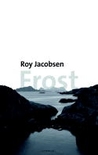
When I looked at my reviews of books at Goodreads the other day, I discovered that I almost exclusively give the the books a rating of four or five stars. But the reason is obvious: I only review books that I have finished reading, and I only finish books that I like. Frost was such book.


Frost by Roy Jacobsen
My rating: 4 of 5 stars

Roy Jacobsen
Valhalla Rising
Valhalla Rising
Frost (2003) is a historical novel from the Viking Age written by the Norwegian author Roy Jacobsen, who also co-wrote Valhalla Rising (2009), the popular movie starring Mads Mikkelsen. Frost is translated into Russian and several other languages, but not into English. This is a review of the Norwegian original.

The book is about Gest (Torgest Torhallason), who as a 13 year old boy or man, to avenge the murder of his father, kills Viga-Styr, one of the greatest chieftains in Iceland. He has to flee Iceland, and in Norway he hides among friends. But even in Norway he cannot escape the powerful friends of Viga-Styr.

Gest is a very short and small man, but with cleverness and aggressive surprise attacks, he kills several of his pursuers. He thus gets even more enemies but befriends Eirik Hakonson, the earl of Hladir. After Olav Tryggvason's defeat in the Battle of Svolder, Eirik has become ruler of Norway. The novel tells how Eirik of Hladir, with Gest as adviser, joins up with Cnut the Great to conquer England in 1013.

Frost
What strikes me when I read Frost is how Jacobsen manages to create a genuine Viking feel to the story. Jacobsen writes in a variant of Norwegian called Bokmål (Book language), which over the centuries has received strong influence from a lot of foreign languages (German, Danish, Latin, French, English), but despite this influence Norwegian has preserved a large vocabulary based on Old Norse (and Germanic roots). Many more or less forgotten words from the old language have also been vitalized through modern Norwegians translations of Icelandic sagas and old poems. Modern authors thus have a lot of Norse-rooted words at hand when they need to denote and describe old objects, people, customs and actions. Jacobsen knows how to utilize this vocabulary in giving his story a trustworthy Viking tone.

What I dislike in Frost is the author's dealing with religion. When Gest meets Christianity in Norway and later in England, he starts thinking about the Christian faith and wonder if he is going to let himself be baptised. All this musing, however, has to have happened on the background and very much in contrast to his former Old Norse world-view, dominated as this must have been with gods like Odin and Thor and experiences of invisible creatures and forces, such as land-spirits, elves, dwarves, and the Norns that were weaving his fate. This Old Norse way of experiencing life Jacobsen ignores. Which of is too bad.


View all my reviews

Visit John Snow's Facebook page

Monday, 12 August 2013

Giles Kristian on Goodreads

Currently the historical fiction writer Giles Kristian is discussing his debut novel Blood Eye with readers in the group Ancient and Medieval Historical Fiction at Goodreads. I have participated in the discourse, read his book, and written a review. If you're on Goodreads, feel free to add me as your friend. See you there!


Blood Eye (Raven #1)Blood Eye by Giles Kristian
My rating: 3 of 5 stars

I had high expectations, but the book was a bit disappointing. Not that Kristian doesn't write well and he certainly displays a wide knowledge of Saxons, Vikings, and Norse mythology; somehow I felt at home in his world. It was the way the story is told that disappointed me.


Sunday, 11 August 2013

"Saga Oseberg" sails to Kaupang

Kaupang was an important Viking trading town in northern part of Denmark (today's south-eastern part of Norway). This summer "Saga Oseberg", an exact replica of the Oseberg ship, sailed in Viksfjord to Kaupang. See more pictures in the local newspaper Østlands-Posten and read my review of a beautiful Kaupang book below.

Saga Oseberg (Viking ship)
Saga Oseberg's rowers


Saga Oseberg (Viking ship)
Saga Oseberg with captain and crew


Kaupang
Kaupang

KAUPANG: The Viking Town. The Kaupang Exhibition at UKM, Oslo, 2004-2005 by Dagfinn Skre
My rating: 5 of 5 stars

This s a gem of a book. It tells the story of Kaupang, the trading place at Skiringssal in the south-eastern part or Norway. Kaupang was an urban centre or town in the 9th and 10th centuries, and the book places Kaupang among the most important trading centres in the Scandinavian Viking age, along with Ribe, Birka, and Hedesby.

Monday, 17 June 2013

Caught in A Game of Thrones


A Game of Thrones
A Game of Thrones
So much is said and written about A Game of Thrones and A Song of Ice and Fire that I will tell about my reading of the books. I thought I'd never heard about George R.R. Martin when I first read about HBO's TV series on the Web. This was in autumn 2011, and in USA the first season of A Game of Thrones was over, but in Norway, where I live, it hadn't started. When I discovered that all of the four books in A Song of Ice and Fire were among the best-sellers on Amazon, and that fans anxiously awaited A Dance with Dragons, I got curious and bought the four-book bundle for Amazon Kindle for $13.49.

And that was it. I felt ambushed, caught in a trap and imprisoned, with no way of escaping. A Song of Ice and Fire has so many fascinating and complex characters, so many parallel and intertwined plots, so many places and customs, and so much action that I was totally caught. I have never had such a captivating reading experience in my life.

Tuesday, 14 May 2013

Brynhild, Sigurd, Gudrun - the fatal love triangle

The Saga of the VolsungsThe Saga of the Volsungs by Anonymous
My rating: 5 of 5 stars

The Saga of the Volsungs is a great Old Icelandic legendary saga and one of the best magic-heroic tales ever told. It is the story of Sigurd the Dragon Slayer and his family, the Volsungs, and their conflicts with other northern royal families in the pre-Viking period. It is a story full of mythological figures, human drama, love, hate, and endless series of vengeance and murder.

Tuesday, 7 May 2013

And Hrolf sliced off both his buttocks

The Saga of King Hrolf KrakiThe Saga of King Hrolf Kraki by Anonymous
My rating: 4 of 5 stars

(This is a review of Jesse L. Byock's translation in Penguin Classics, and if we can talk of spoilers in a legend, here are lots of spoilers.)

The Saga of King Hrolf Kraki is a legendary tale and one of the greatest Old Icelandic legendary sagas.

Hrolf Kraki, king in ancient Denmark, was not as many of the other legendary heroes; he was among the quiet and mild rulers, which, of course, didn’t prevent him from taking action and revenge when required. He is famous for having sowed pieces of gold on the Fyri’s Plane (in Sweden) to distract King Adils and his warriors. Hrolf was fleeing after having regained the gold Adils stole when he killed Helgi, Hrolf’s father. Hrolf also threw a gold ring in front of the pursuing king. When King Adils stopped to acquire the ring, Hrolf said that now “I have made the greatest of the Swedes stoop like a swine.” When Adils bent forward to fetch the ring, Hrolf sliced off both his buttocks “right down to the bone.”

Sunday, 28 April 2013

The Sagas of Ragnar Lodbrok


The Sagas of Ragnar LodbrokThe Sagas of Ragnar Lodbrok by Ben Waggoner
My rating: 4 of 5 stars

It’s not an easy read. The Sagas of Ragnar Lodbrok is patchwork of literary styles, genres, and stories. Add a lot of names and genealogies and a rather wordy translation, and you have a bit of work ahead of you.

But it’s worth it. The Sagas of Ragnar Lodbrok contains tree sagas, a list of Swedish kings, and a long poem, Krákumál. If you’re unaccustomed with the Old Icelandic literary style, you should start with the sagas: Read The Saga of Ragnar Lodbrok first, then The Tale of Ragnar’s Sons, and Sögubrot last. Taken together, the sagas give the heroic legends of Ragnar and his sons: Ivar the Boneless, Sigurd Snake-in-the-Eye, and the others.


Sunday, 14 April 2013

Ragnarok

RagnarokRagnarok by A.S. Byatt
My rating: 5 of 5 stars

A.S. Byatt’s Ragnarok: The End of the Gods is a great book: well-written, interesting, exciting. I read it twice.

Ragnarok is about a little girl. Evacuated from Sheffield, she grows up in the English Second World War countryside. Here she starts reading the English version of the German book Asgard and the Gods. Digging into the mind of the child, Byatt simultaneously tells the girl’s life, her experiences with Asgard and the Gods, and the story of the Norse gods and Ragnarok. It’s elegant.

I don’t understand the end of the book. Does it give a stripe of hope? I don’t know. In Voluspå (the great Edda poem telling of the World’s beginning and end), a new and cleansed Earth rises after Ragnarok. But I prefer to believe that the Vikings and Byatt see Ragnarok as the ultimate destruction. Humanity lives and dies. End of story.


View all my reviews

Tuesday, 26 March 2013

Vikings - a historical fantasy series?


Review:
The History Channel series Vikings is a fabulous saga full of exiting characters, good action, and realistic Viking settings. In four episodes we have followed Ragnar Lothbrok (played by Travis Fimmel). So far I’m impressed. Just as Ragnar at the end of episode four is preparing for more action, so am I.


The Lothbrok character is built on the sagas of Ragnar Lodbrok, who was a legend even in the late Viking Age, and definitely when the sagas were written half a millennium after Ragnar’s death. Despite being shown on History Channel, Vikings is not a historical series in a strict sense; it is rather a new version of the ancient Ragnar Lodbrok legend. In order to tell a good story, the series even tends to be rather unhistorical.